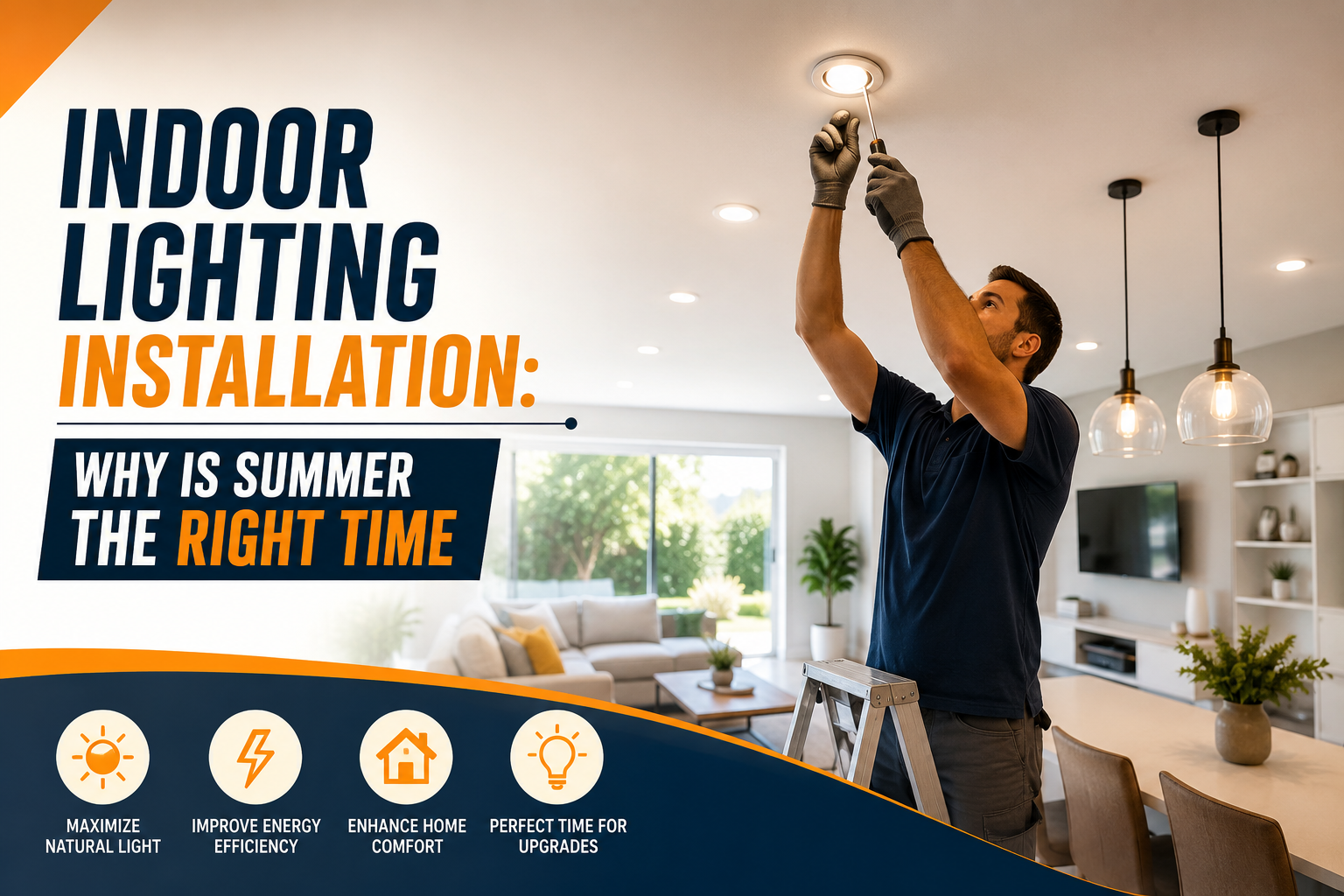
Lighting is the most used electrical system in any home, and it is often the most neglected from an upgrade standpoint. Homeowners replace bulbs when they burn out, maybe swap a fixture here or there, and otherwise leave their lighting setup exactly as it was when they moved in. At Carol’s Electric, we want to make the case for thinking about indoor lighting differently, and summer gives us a practical angle to do that. Properly executed indoor lighting installation in Pittsboro is not just an aesthetic upgrade. During summer months, it has real implications for how hard your cooling system has to work.
Why Does Indoor Lighting Matter More in Summer Than Homeowners Realize?
Most homeowners do not connect their lighting choices to their energy bills beyond the direct electricity cost of running the lights. But incandescent fixtures release roughly 90 percent of the energy they consume as heat. In a home that is running air conditioning during summer, that heat contribution has to be removed by the cooling system, which adds to the cooling load and, by extension, the energy cost of staying comfortable.
Switching to LED removes most of that waste heat from the equation. According to the US Department of Energy, LED bulbs use at least 75 percent less energy than incandescent lighting and produce significantly less heat in the process. During summer in central North Carolina, that combination of direct energy savings and reduced cooling load makes the timing of a lighting upgrade meaningful rather than arbitrary.
What Does Professional Indoor Lighting Installation in Hillsborough Involve?
The process is more involved than swapping bulbs. Professional indoor lighting installation in Hillsborough covers fixture selection, circuit compatibility assessment, dimmer compatibility in rooms where dimming is desired, and installation of fixtures that are correctly matched to the application. Bathrooms, kitchens, home offices, and living spaces all have different lighting requirements, and a professional installation accounts for those differences rather than applying a uniform approach.
At Carol’s Electric, we start by understanding how each space is used and what the homeowner wants to achieve with the lighting. Some clients want recessed lighting in the kitchen for clean, even distribution without overhead fixture glare. Others want layered lighting in living rooms that can shift from bright working light to softer evening ambiance. Those goals require different approaches, and our team designs accordingly.
We also assess the existing circuits before installation. Older homes, particularly in Hillsborough where a meaningful portion of the housing stock predates 1980, may have circuits that were not designed for the fixture configuration being proposed. Identifying and addressing that before the installation begins prevents problems after the work is complete.
How Does LED Lighting Installation Change the Equation for Residential Spaces?
LED lighting installation is the standard recommendation across all residential applications at this point, and for good reason. The energy efficiency advantage is well documented, but the quality of light produced by modern LED fixtures is also worth noting. Early LED products had a reputation for harsh or unnatural light. Current LED technology offers a full range of color temperatures, from warm incandescent equivalents to cooler daylight tones, and produces light quality that most homeowners find indistinguishable from or preferable to what they were replacing.
Here is what Carol’s Electric considers when specifying LED fixtures for a residential installation:
- Color temperature selection matched to the room’s function and aesthetic
- CRI (Color Rendering Index) rating to ensure accurate, natural-looking color rendering
- Dimmer compatibility to confirm the fixture and dimmer work together without flickering
- Fixture placement for even light distribution without hot spots or dark corners
- Smart control compatibility for homeowners interested in automated or app-controlled lighting
That level of specification is the difference between a lighting upgrade that genuinely improves the space and one that simply replaces the old fixtures with new ones of a different type.
What Is the Process for Scheduling a Lighting Upgrade With Carol’s Electric?
It starts with a call or a message. Our team will discuss what you are looking to achieve, get a basic picture of the space and current setup, and schedule a site visit for a free estimate. The estimate covers materials and labor with no obligation attached.
For Pittsboro and Hillsborough homeowners, Carol’s Electric is a familiar name in the community. The business has served both areas as part of its Triangle-wide service territory for over 30 years. Carol Dixon Acton, the licensed owner, built the company on honest work and clear communication, and that is what you get from every interaction with the team.
Reach us at (919) 929-0582, visit carolselectric.com, or use the contact page. For a broader picture of what we offer, the services page is a useful starting point.
Frequently Asked Questions
How long does a typical indoor lighting installation take in a Pittsboro home?
A single-room lighting upgrade is usually completed in a half day to a full day. Larger whole-home projects may span two to three days depending on scope.
Do LED fixtures require special wiring?
In most cases, existing wiring is compatible with LED fixtures. We check circuit and dimmer compatibility during the estimate process to confirm.
Can Carol’s Electric help with fixture selection as well as installation?
Yes. We are happy to discuss fixture options and help you identify choices that fit your goals for each space before finalizing the installation plan.
Is a permit required for indoor lighting installation in Hillsborough or Pittsboro?
Basic fixture replacements on existing circuits typically do not require permits. New circuit work does, and we handle any required permit processes as part of the project.
What makes LED the right choice for kitchens specifically?
Kitchens benefit from LED’s combination of bright, accurate light for task work, low heat output near food preparation areas, and long lifespan that reduces the inconvenience of fixture access for bulb replacement.