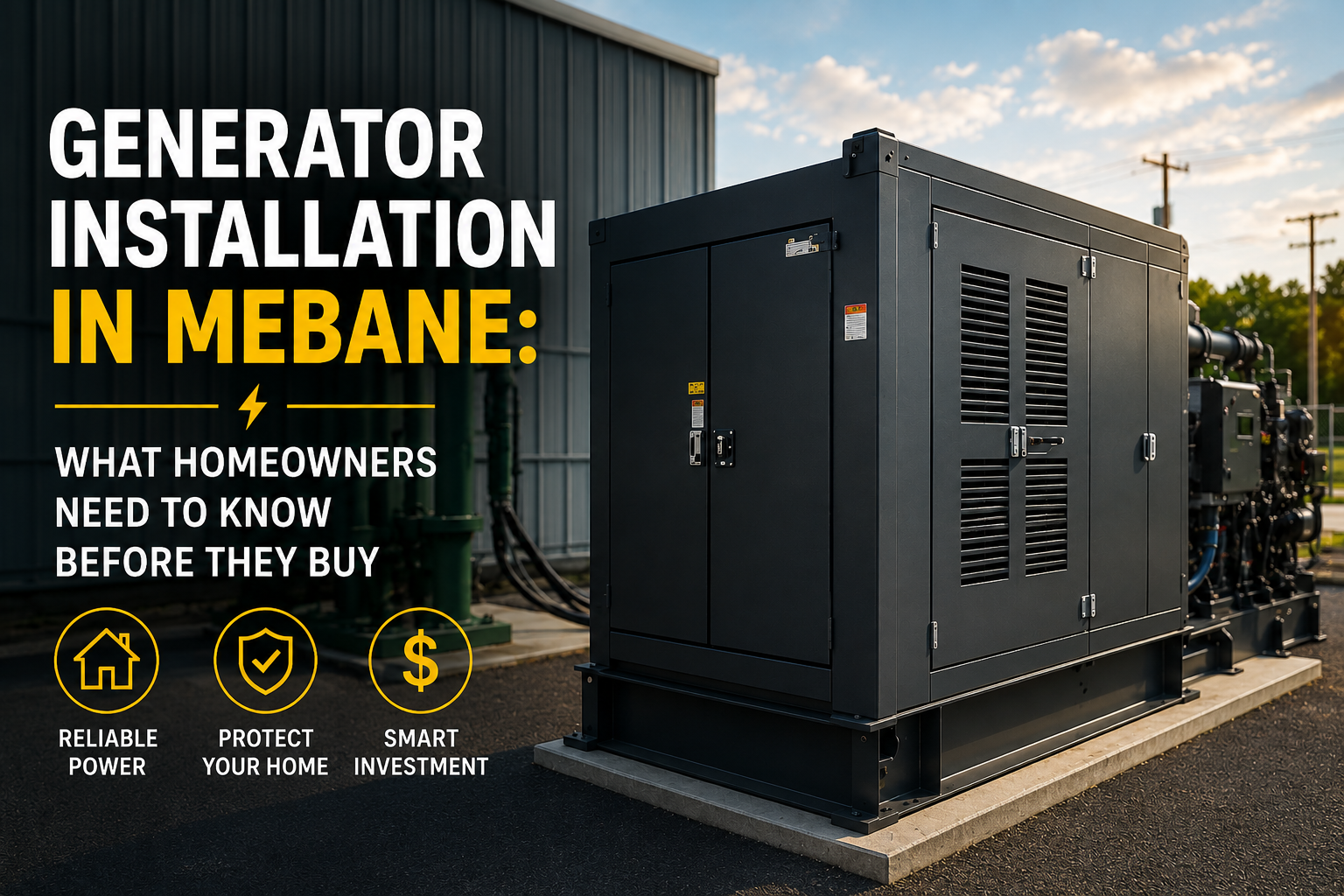
Power outages in central North Carolina are not rare events. Whether it is a summer thunderstorm, an ice storm in winter, or a grid-level issue, homes in Mebane and Hillsborough lose power with enough regularity that backup power is a serious consideration for many families. At Carol’s Electric, we have handled generator installation in Mebane and the surrounding region for years, and we see the same questions come up over and over. This post covers what you actually need to know before making the investment.
What Types of Generators Are Available for Home Use?
There are two main categories most homeowners consider. Portable generators are lower in upfront cost and can power a selection of appliances through extension cords or a transfer switch. They require manual setup, need to be stored between uses, and run on gasoline, which means fuel storage and management are part of the equation.
Standby generators are permanently installed units that connect directly to your home’s electrical system and run on natural gas or propane. They turn on automatically within seconds of a power outage, without any action required from you. For households where medical equipment, sump pumps, or climate control are critical, that automatic activation is genuinely important.
At Carol’s Electric, we recommend standby units for most homeowners who want reliable, hands-off backup power. We work with trusted generator brands and size the unit to your actual load requirements so you are not overpaying for capacity you do not need or underbuying and running short during an extended outage.
What Does Standby Generator Installation Actually Involve?
This is where working with a licensed electrician makes a significant difference. Standby generator installation in Mebane is not a plug-and-play process. It involves a concrete or composite pad installation for the generator unit, a fuel connection through a licensed gas contractor if natural gas or propane is involved, a transfer switch installation that isolates your home from the utility grid when the generator is running, and full wiring integration into your electrical panel.
The transfer switch is particularly important. It prevents backfeed, which is the dangerous condition where a running generator pushes power back onto utility lines while crews may be working on them. Our installations are done to code and include all required permits and inspections, so you have documentation that the work was done properly.
We also conduct a full load test before we consider the job complete. The generator should start automatically, transfer the load cleanly, run under load without issue, and return control to the utility when power is restored, all without any input from the homeowner.
How Do We Handle Generator Installation in Hillsborough?
Our process for generator installation in Hillsborough follows the same standards as Mebane, with attention to any municipality-specific permit requirements. Orange County and Alamance County may have slightly different inspection schedules, and we manage that process on your behalf. You do not need to track permit approvals or schedule inspections independently.
For Hillsborough customers, we also pay attention to fuel availability. Natural gas is available in more of the developed areas, while propane tank installation may be needed in more rural properties. We coordinate with qualified gas contractors when that is part of the scope.
Is a Standby Generator Worth the Cost?
According to Generac, the average US home experiences over eight hours of power outages per year, though areas prone to severe weather often see significantly more. The cost of a standby generator for a mid-sized home typically runs between $5,000 and $12,000 fully installed depending on unit size and complexity of the installation.
That investment has to be weighed against what an extended outage costs you in spoiled food, hotel accommodation, and for some households, medical or safety considerations. It also adds measurable value to a home. A study by the Remodeling Magazine’s Cost vs. Value report has consistently shown that standby generator installations recoup a meaningful portion of their cost at resale.
We believe backup power is one of the more practical home investments available. We are happy to walk you through the options without pressure, starting with a free estimate that reflects your home’s actual requirements.
Keeping the Lights On Is What We Do
At Carol’s Electric, we take backup power seriously because our customers do. Whether you are exploring your first generator or upgrading an older unit, our team is ready to help you make the right choice and get it installed correctly. Reach out to us via our contact page or call (919) 929-0582. You can also review our full services overview and learn more about us before getting in touch.
Frequently Asked Questions
- How long does generator installation typically take?
Most residential standby generator installations are completed within one to two days, depending on site conditions and permit processing timelines.
- Do I need a permit for generator installation in Mebane?
Yes. We handle all permit applications and coordinate inspections as part of the installation process.
- What size generator do I need for my home?
Sizing depends on which circuits you want to back up. We assess your load requirements and recommend the appropriate unit size before any purchase.
- Can a generator be installed if I have a natural gas connection?
Yes. Natural gas is one of the preferred fuel sources for standby generators due to its consistent availability and the elimination of fuel storage requirements.
- How often does a standby generator need to be serviced?
Most manufacturers recommend annual servicing. The generator also runs a self-test cycle weekly, which helps identify issues between professional service visits.